


How to Reset Your Check Engine Light: Tips from Kiefer Kia in Eugene
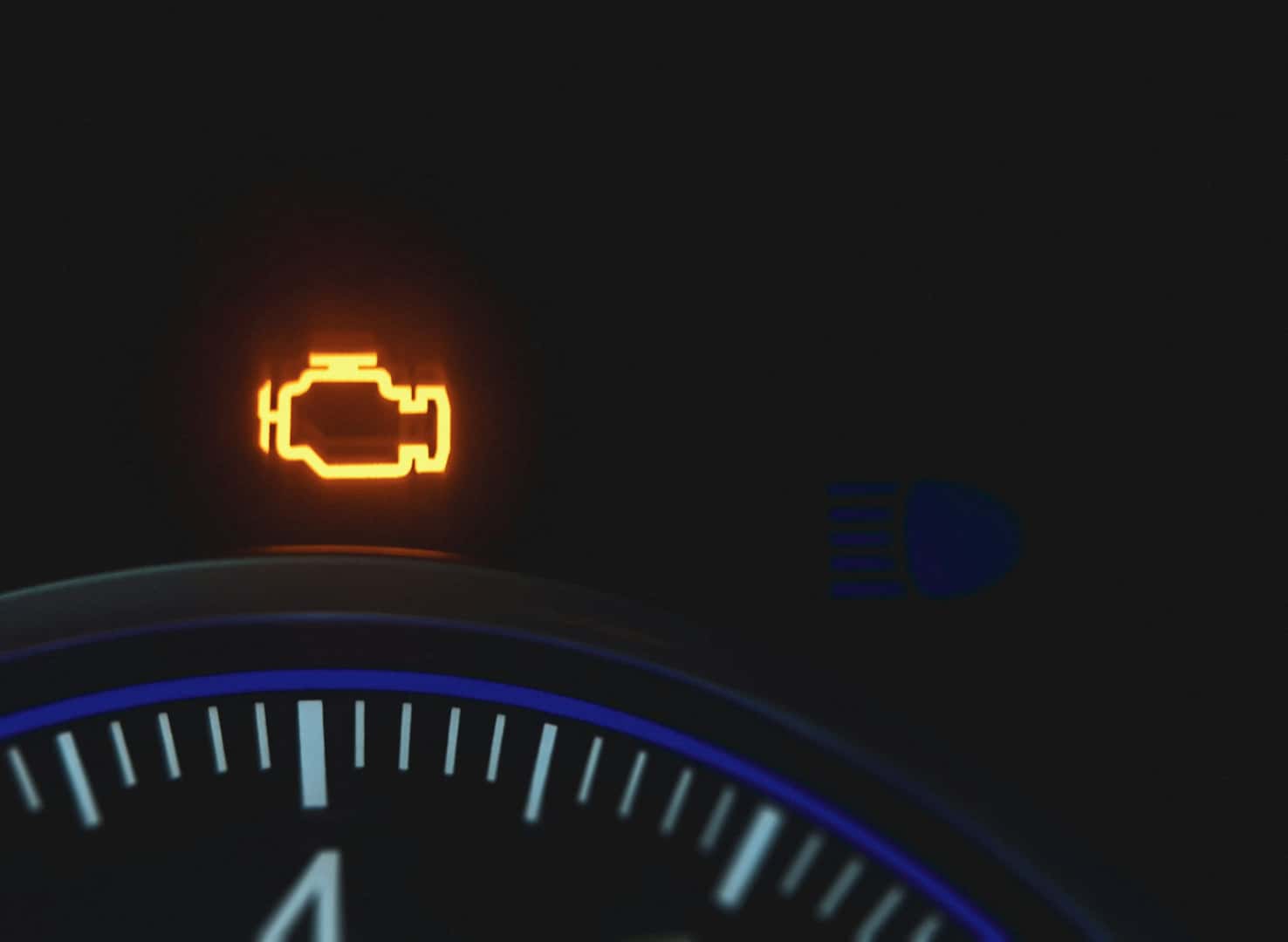 Photo by Compagnons on Unsplash
That little amber engine icon lighting up on your dash can ruin your morning commute. Before you head to a parts store for a quick fix, it helps to understand what’s actually happening under the hood. This guide covers how to reset check engine light warnings safely, plus when a reset is just putting a bandage on a bigger issue. If you’re in Eugene, Springfield, or anywhere in Lane County and want it looked at properly, you can always schedule service online with our team.
What Does a Check Engine Light Actually Mean?
Every vehicle built since the 1996 model year runs on OBD-II (onboard diagnostics, second generation), a system the EPA requires to monitor your emissions, ignition, and fuel systems. When something falls outside normal range, the Powertrain Control Module (PCM), your car’s central computer, stores a Diagnostic Trouble Code (DTC) and lights up the MIL (malfunction indicator lamp), the official name for your check engine light.
That code stays stored until the actual problem gets fixed, whether you clear the light or not. The light is a messenger, not the issue itself. Resetting it without addressing the trigger is a bit like turning off a smoke alarm without checking for a fire.
Whether the light is solid or flashing changes everything. A solid light usually points to something less urgent, maybe an emissions issue or a sensor glitch, and you can typically drive cautiously and get it checked soon. A flashing light often signals an active engine misfire, and continuing to drive can cause real damage. If yours is flashing, ease off the accelerator, reduce speed, and pull over safely when you can.
Simple Fixes: Quick Check Engine Light Resets
If you’re wondering what to do when the check engine light comes on, there are a few DIY steps worth trying before you assume the worst. These won’t fix an underlying mechanical issue, but they can clear light triggers caused by minor, resolved conditions.
Checking and Tightening a Loose Gas Cap
A loose, cracked, or missing gas cap disrupts the pressure balance in your evaporative emissions system, and it’s one of the most common reasons drivers ask why their check engine light won’t go off. This typically shows up as code P0440, P0441, or P0457.
- Pull over safely and locate your gas cap.
- Remove it and check for cracks, then reseat it until you hear it click several times.
- Note the mileage, since it can take a day or two of normal driving (a full drive cycle) for the light to clear on its own.
If it stays lit after that, the cap itself may need replacing, or you could be dealing with a cracked filler neck or a deeper emissions fault worth having diagnosed.
Completing a Drive Cycle Reset
A drive cycle is your vehicle’s self-diagnostic process, run by the PCM to confirm a repair actually solved the problem. One full cycle takes roughly 20 to 30 minutes, and some codes need five or more cycles before the system considers them resolved.
- Drive a mix of city streets and highway speeds.
- Include some idle time along with steady acceleration and deceleration.
- Repeat this over two to three days, covering somewhere between 30 and 100 miles depending on your specific Kia model. Check your owner’s manual for exact guidance.
This matters especially here in Lane County, since Oregon DEQ emissions testing requires your OBD-II monitors to show “ready” status, something that only happens after a proper drive cycle following any code clear or battery disconnect.
Using an OBD-II Scanner to Clear Codes
An OBD-II scanner plugs into your vehicle’s diagnostic port, most often located under the dash near the pedals on the driver’s side. By law, it has to be within three feet of the steering wheel and reachable without tools.
- Turn the ignition to “ON” without starting the engine.
- Plug in the scanner and follow its prompts to read stored DTCs.
- Write down the code before doing anything else.
- Select “Clear” or “Erase Codes” on the scanner.
- Cycle the ignition off and back on.
- Drive 10 to 15 miles to confirm the light stays off. If it returns, the underlying issue is still there.
Keep in mind that most consumer scanners just show a five-character code, not what it means. That’s a real gap if you’re trying to understand what’s triggering the light rather than just make it disappear.
When It’s More Than a Simple Reset: Serious Underlying Causes
A reset sometimes holds for good. Other times it doesn’t, because the light was never the actual problem to begin with.
Common Mechanical Triggers Behind the Warning
A handful of components are behind the majority of check engine light repair visits we see. The catalytic converter, monitored by downstream O2 sensors, can suffer expensive damage in minutes if a severe misfire sends unburned fuel through the exhaust. Spark plugs wear down over time and cause misfires, rough running, and reduced power, though routine replacement usually prevents this from becoming an issue.
The O2 sensor works differently: it measures oxygen levels in your exhaust, and when it fails, your engine burns excess fuel, which in turn can damage the catalytic converter, sometimes even causing an emissions test failure. The MAF (mass airflow) sensor is sensitive to oil, dirt, and moisture; sometimes it just needs cleaning, sometimes it needs replacing, and either way a failure leads to rich or lean fuel conditions and worse fuel economy. And, of course, there’s the gas cap issue we already covered.
Why Manually Clearing Codes Can Mask Bigger Problems
Erasing a code tells the computer to stop reporting what it already found; it doesn’t fix anything underneath. If the fault is still there, it comes back, and repeated clearing can hide a problem that’s quietly getting worse. A small sensor or ignition coil repair now can prevent catalytic converter damage that costs significantly more to repair later. A reset works best as a first step, not the finish line.
If you’re seeing the light return again and again, contact our service team and let’s find out what’s actually happening under the hood.
Loose Gas Cap vs. Critical Failure: How to Tell the Difference
A loose gas cap almost always produces a solid, steady light with no other symptoms; your car drives normally, and tightening the cap often resolves it within a day or two. A critical failure looks different. You might notice rough idling, a loss of power, unusual smells, or vibration alongside the light. If the light is flashing rather than solid, treat it as urgent regardless of how the car feels, since a flashing MIL often points to an active misfire that can damage the catalytic converter quickly.
Risks of Ignoring the Light After a DIY Reset
After clearing check engine light codes yourself, it’s tempting to consider the matter closed. But a code that returns is telling you something real. Continuing to drive with an unresolved issue can mean reduced fuel economy, higher emissions (worth noting if you’re due for DEQ testing in Lane County), or in worse cases, engine and catalytic converter damage that turns a simple fix into a major repair. Intermittent faults can also be tricky to catch, sometimes taking more than one diagnostic visit to reproduce and pin down. Persistent lights deserve a real look, not another reset.
For drivers who’ve tried disconnecting the battery as a reset method, a quick safety note: make sure the vehicle is off, use gloves, and use caution around the battery terminals. This method can clear the light, but it also wipes your radio presets, computer memory, and learned parameters like fuel trims and idle settings, and it does nothing to diagnose the actual cause.
That leaves three ways to approach a check engine light, and they’re not interchangeable. Here’s how a scanner, a battery disconnect, and a professional diagnostic compare on time, effectiveness, and what each one is actually good for.
| Method | Time Required | Effectiveness | Risk Level | Best For |
|---|---|---|---|---|
| OBD-II Scanner | 10-20 minutes plus a confirmation drive | Clears the light if the issue is truly resolved | Low, but can mask unresolved problems | Minor, already-fixed issues like a gas cap |
| Battery Disconnect | 15-30 minutes | Clears the light temporarily, no diagnosis | Moderate; erases settings, doesn’t fix root cause | Rarely recommended as a standalone fix |
| Professional Diagnostic | Varies by issue | Identifies and resolves the actual root cause | Low; addresses problem directly | Recurring lights, flashing lights, or unclear symptoms |
Signs You Should Stop DIY and Call a Professional
Some check engine light situations are worth a quick look on your own, but others need a technician right away. Stop and call a professional if any of the following apply:
- The light is flashing rather than solid
- You notice a loss of power or acceleration
- There’s a burning smell from the engine bay
- The idle feels rough or unstable
- The light returns shortly after you clear it
Why Eugene Drivers Trust Kiefer Kia’s Factory-Trained Technicians
We’ve been a family-owned dealership serving Eugene, Springfield, Cottage Grove, Corvallis, Florence, Roseburg, and the surrounding region since 1996, making us one of the oldest Kia dealerships in the country. Our factory-trained technicians use genuine Kia parts and model-specific procedures, which matters if you want to protect the warranty on a new or CPO vehicle.
We also lean on professional-grade diagnostic equipment, including Kia’s manufacturer-specific scan tools, that read deeper into the ECU than a basic consumer OBD-II scanner can. Where a store-bought scanner might just show you a five-character code, our tools help our team see exactly what that code means for your specific model and pull up the full diagnostic picture.
Book Your Check Engine Light Inspection with Kiefer Kia Today
Plenty of drivers ask for their check engine light to be reset or cleared, but what they’re really after is the underlying problem solved, not just the warning switched off.
Scheduling Made Simple
Scheduling online takes just a few minutes, gives you an up-front cost estimate by text, and lets you note any warning lights, noises, or vibrations ahead of your visit. We’ll keep you updated by text throughout the repair, and you’re welcome to wait in our lounge with WiFi or grab a loaner ride while we work. Ask about current service specials when you book.
Get In Touch
Book your inspection or contact our service team directly. You’ll find us at 345 Goodpasture Island Rd, Eugene, OR 97401, or reach our service line at (541) 229-5723.

0 comment(s) so far on How to Reset Your Check Engine Light: Tips from Kiefer Kia in Eugene