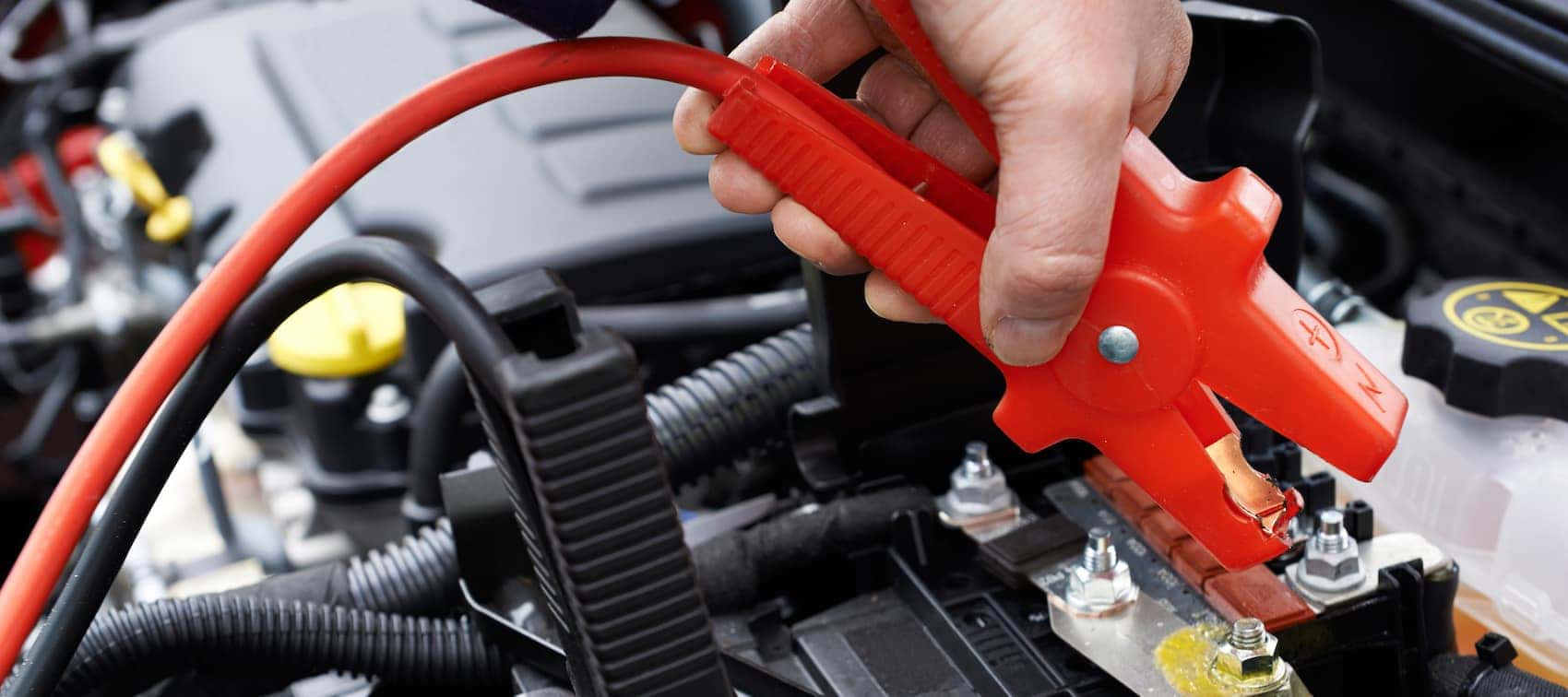
If your car will not start and the engine is slow to turn over, a weak battery may be the problem. Knowing how to safely jump start a car can help you get moving again around Springfield, but it is important to do it the right way. If you would rather have a technician take a look, the team at Kiefer Kia can inspect your battery, charging system, and connections at our service center. You can also explore more helpful advice in our service tips and tricks.
Important: Do not try to jump start a battery that is cracked, leaking, badly swollen, or frozen. If the battery looks damaged, it is safer to call for help and have the vehicle inspected.
If you have roadside assistance, that is always a good option. If you are handling it yourself, you will need a set of jumper cables and another vehicle with a healthy 12-volt battery. Before you begin, make sure both vehicles are in Park or Neutral, turned off, and not touching each other.
After the vehicle starts, let it run or drive it for about 15 to 30 minutes so the battery can recover some charge. If it dies again soon after, the battery may be worn out, or the issue may involve the alternator, starter, or a loose connection. That is a good time to schedule service and have the system tested properly.
A jump start does not fix every no-start situation. If the engine still will not fire up, these clues can help narrow things down:
If you are dealing with repeat battery trouble, our team can help with testing, replacement, and genuine components from the parts center. It is also worth checking our current service specials before your visit.
Short trips, colder mornings, leaving lights on, and an older battery can all make a no-start situation more likely. A battery check during routine maintenance can help you catch problems before you end up stuck in a parking lot around Salem. If your Kia is due for maintenance, our team can inspect the battery along with the rest of your vehicle using the recommended intervals in our Kia maintenance schedule guide.
If you are not sure whether the battery is the problem, get in touch with our team through contact us. We are happy to help you figure out the next step.
Jump starting a car is useful to know, but it is even better to know when to stop troubleshooting and let a technician take over. If your battery keeps going dead, your vehicle struggles to crank, or you just want peace of mind before your next drive around Corvallis, bring it by Kiefer Kia. Once everything is sorted out, our Eugene guide has plenty of ideas for where to head next.
A good rule of thumb is to let the vehicle run or drive it for about 15 to 30 minutes after it starts. That gives the battery time to pick up some charge, but if the battery is weak or old, it may still need testing or replacement.
If a jump does not work, the problem may not be the battery alone. Corroded terminals, a failing starter, a bad alternator, a blown fuse, or another electrical issue can all keep the engine from starting.
Do not attempt to jump the high-voltage battery in a hybrid or EV. Many of these vehicles still have a separate 12-volt battery that can be boosted, but the battery location and procedure can vary, so check your owner’s manual first.
If your vehicle is slow to crank, needs frequent jumps, or the battery is several years old, it is smart to have it tested. Replacing a weak battery before it fully fails can save you a lot of hassle.


